Coverage
Schemes
OGSHIA operates several health insurance schemes to ensure every resident of Ogun State has access to affordable, quality healthcare.
Formal Sector Health Insurance Scheme
The Formal Sector Health Insurance Scheme is for the following groups: the Public Sector Health Insurance Scheme; the Organized Private Sector Scheme; State Uniformed Services (e.g. TRACE); and Students of Tertiary Institution Social Health Insurance Programmes.
The sector is made up of the public sector (Civil and Public servants) and the Organised Private Sector. The initial implementation phase targets civil servants in Ogun State and their biological dependants. The scheme also provides cover for retirees.
The formal sector health plan covers the civil servant, his/her spouse and four (4) biological children under the age of 18 as a family package. Deductions for premium are made directly from employees' salaries and are progressive in line with the principle of equity (the more you earn, the more you pay). There is a 60-day waiting period before staff can access health care.
Informal Sector Health Insurance Scheme
The informal sector is strategically targeted with innovative means to ensure every person in this sector is covered with health insurance. The Agency works closely with all stakeholders to develop programs and strategies towards this.
The scheme covers: Community-Based Health Insurance Scheme; and Voluntary Contributors Health Insurance Scheme. This sector includes market/trade unions, transport unions, farmers' associations, traditional and religious bodies, and other associations not captured under the public or organized private sectors — constituting the larger proportion of society.
The informal sector health plan covers the enrollee alone; the family package comes at a discount. Contributions are made yearly, or as otherwise agreed with OGSHIA. There is a 60-day waiting period before access to healthcare.
Vulnerable Group Health Insurance Scheme
This group constitutes residents of Ogun State who cannot pay for themselves (indigents) and are covered by subsidies from Government, donations and grants from donor agencies and philanthropists — with special attention on pregnant women, children under 5, the elderly, the physically and mentally challenged, and prison inmates.
Basic Health Care Provision Fund (BHCPF)
The BHCPF is an intervention by the Federal Government of Nigeria aimed at acting as a vehicle for the country's effort at achieving Universal Health Coverage (UHC).
The intervention delivers Primary healthcare services, the Basic Minimum Package of Health Services (BMPHS), and emergency medical treatment (EMT) to Nigerians.
The National Health Act of 2014 mandated the establishment of the BHCPF. The main source of funding is 1% of the country's Consolidated Revenue Fund (CRF). BHCPF is implemented through three administrators: NPHCDA via OGPHECADEB (45%); NHIS via OGSHIA (50%); and FMOH via DHS & NCDC for EMT (5%).
Funds from the NHIS gateway (via OGSHIA) are targeted at health insurance cover for the indigent in the communities, with emphasis on pregnant women and children Under 5.
Sponsorship of Indigents (Poor) for Health Insurance Coverage
This is an adoption program for donors and corporate businesses to adopt and pay premium for the vulnerable group as a form of Corporate Social Responsibility (CSR).
With the fast-growing population, healthcare delivery cost cannot be borne by Government alone. The concept of health insurance — operating on solidarity and equity — allows access to healthcare for all, even the indigent.
OGSHIA's 'sponsor an indigent' programme allows individuals and corporate entities to adopt and take financial responsibility for the annual premium of a specified number of indigent residents.
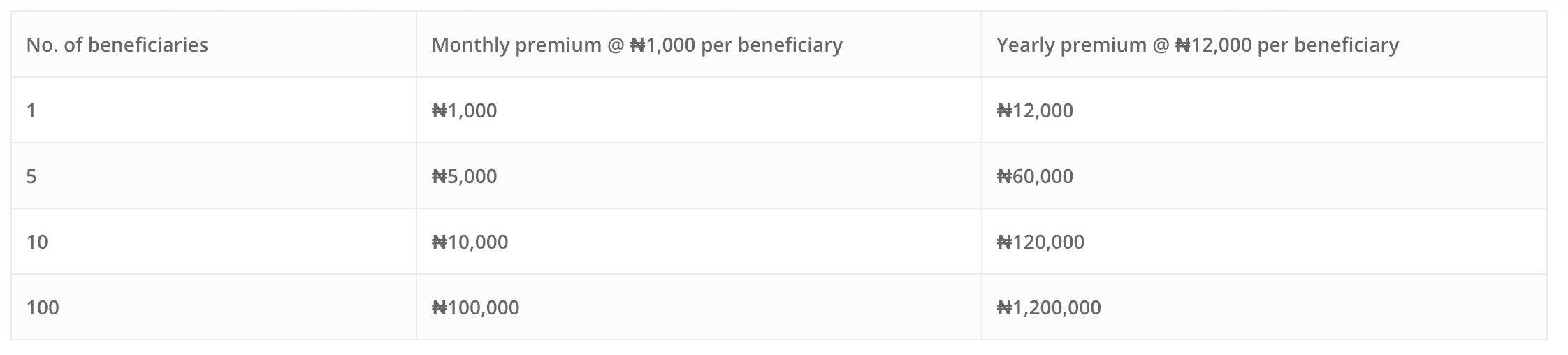
Breakdown for the indigent/vulnerable group, on an individual basis: Monthly premium — ₦1,000 per beneficiary; Yearly premium — ₦12,000 per beneficiary.
Contact us if interested or for more information.